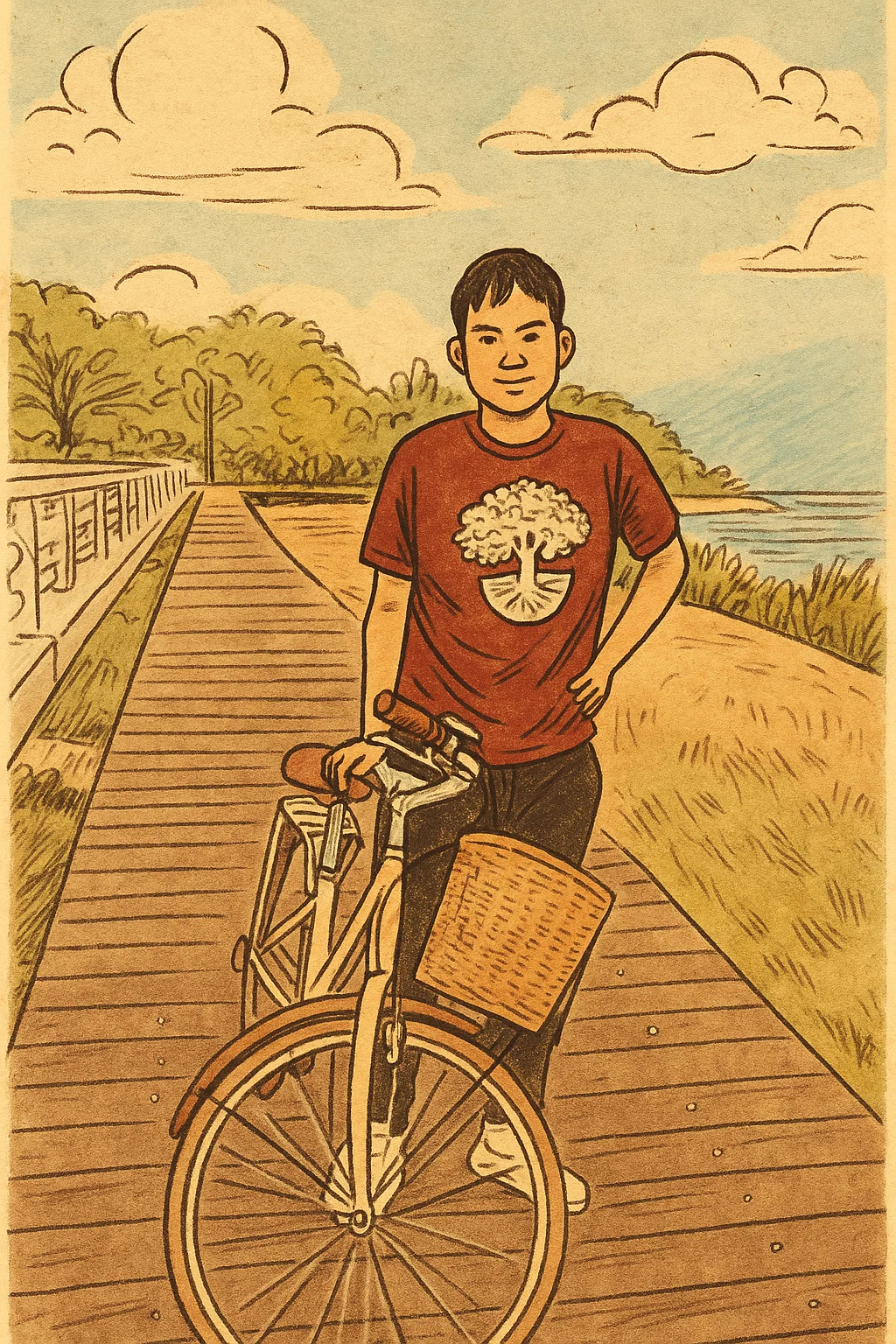
🙏 Thanks for stopping by.

I'm a product designer drawn to the 0→1 space, where I use a fully AI-integrated workflow to bring order to complexity and give form to ambitious ideas.


This process culminates in 'vibe coding,' my method of using AI agents to generate powerful and impeccable prototypes. By translating design directly into pixel-perfect, fully functional code, I can explore, test, and validate experiences at a speed and fidelity that moves beyond traditional prototyping

Experience

Microsoft ·  2017 - Present

Product Designer

PowerPoint, OfficeAI, Office Search


Google ·  2016

Design Intern

Google Shopping

Education

University of Washington

M.S - HCDE

2017


University of Washington

B.A Political Science

2012

My process

📝

Understand the problem

I start by understanding the problem—clarifying goals, constraints, user needs, and success metrics—before exploring solutions.

I aim to reduce friction by considering existing patterns and minimizing user learning curves.

🔬

Learn from users

I work closely with researchers to test early ideas and prototypes, and I can run studies myself when needed.

Staying close to users ensures we’re building solutions that are both useful and intuitive.

đŸ‘šđŸ»â€đŸ’»

Prototype it with or without code

I rely on rapid prototyping to clearly communicate interaction details—UI states, transitions, and user flows—far beyond what static mockups can show.

Recently I’ve embraced vibe coding to bring designs to life in code when needed.

📈

Design doesn’t end at launch

I closely monitor metrics and user feedback after launch to understand what’s working and what needs improvement. Features are often released in stages, so I treat each launch as a learning opportunity—tracking impact, identifying gaps, and shaping follow-up plans.

© 2025 Samuel Shen.

Images © Samuel Shen & respective companies

Handcrafted with Figma

🙏 Thanks for stopping by.

I'm a product designer drawn to the 0→1 space, where I use a fully AI-integrated workflow to bring order to complexity and give form to ambitious ideas.


This process culminates in 'vibe coding,' my method of using AI agents to generate powerful and impeccable prototypes. By translating design directly into pixel-perfect, fully functional code, I can explore, test, and validate experiences at a speed and fidelity that moves beyond traditional prototyping

Experience

Microsoft ·  2017 - Present

Product Designer

PowerPoint, OfficeAI, Office Search


Google ·  2016

Design Intern

Google Shopping

Education

University of Washington

M.S - HCDE

2017


University of Washington

B.A Political Science

2012

My process

📝

Understand the problem

I start by understanding the problem—clarifying goals, constraints, user needs, and success metrics—before exploring solutions.

I aim to reduce friction by considering existing patterns and minimizing user learning curves.

🔬

Learn from users

I work closely with researchers to test early ideas and prototypes, and I can run studies myself when needed.

Staying close to users ensures we’re building solutions that are both useful and intuitive.

đŸ‘šđŸ»â€đŸ’»

Prototype it with or without code

I rely on rapid prototyping to clearly communicate interaction details—UI states, transitions, and user flows—far beyond what static mockups can show.

Recently I’ve embraced vibe coding to bring designs to life in code when needed.

📈

Design doesn’t end at launch

I closely monitor metrics and user feedback after launch to understand what’s working and what needs improvement. Features are often released in stages, so I treat each launch as a learning opportunity—tracking impact, identifying gaps, and shaping follow-up plans.

© 2025 Samuel Shen.

Images © Samuel Shen & respective companies

Handcrafted with Figma

🙏 Thanks for stopping by.

I'm a product designer drawn to the 0→1 space, where I use a fully AI-integrated workflow to bring order to complexity and give form to ambitious ideas.


This process culminates in 'vibe coding,' my method of using AI agents to generate powerful and impeccable prototypes. By translating design directly into pixel-perfect, fully functional code, I can explore, test, and validate experiences at a speed and fidelity that moves beyond traditional prototyping

Experience

Microsoft ·  2017 - Present

Product Designer

PowerPoint, OfficeAI, Office Search


Google ·  2016

Design Intern

Google Shopping

Education

University of Washington

M.S - HCDE

2017


University of Washington

B.A Political Science

2012

My process

📝

Understand the problem

I start by understanding the problem—clarifying goals, constraints, user needs, and success metrics—before exploring solutions.

I aim to reduce friction by considering existing patterns and minimizing user learning curves.

🔬

Learn from users

I work closely with researchers to test early ideas and prototypes, and I can run studies myself when needed.

Staying close to users ensures we’re building solutions that are both useful and intuitive.

đŸ‘šđŸ»â€đŸ’»

Prototype it with or without code

I rely on rapid prototyping to clearly communicate interaction details—UI states, transitions, and user flows—far beyond what static mockups can show.

Recently I’ve embraced vibe coding to bring designs to life in code when needed.

📈

Design doesn’t end at launch

I closely monitor metrics and user feedback after launch to understand what’s working and what needs improvement. Features are often released in stages, so I treat each launch as a learning opportunity—tracking impact, identifying gaps, and shaping follow-up plans.